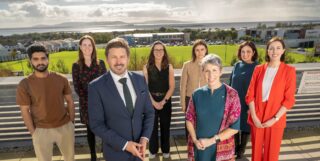
Western Development Commission (WDC) and Atlantic Technological University (ATU) have today announced a major new national research partnership that will examine how remote and hybrid work is reshaping Ireland’s economy, communities and quality of life.
Funded under the TU RISE Programme, the two-year project titled, Connected Futures: The Economics of Remote and Hybrid Work in Ireland and its Impacts on Wellbeing, Mobility, and the Local Economy, represents the next chapter in one of Ireland’s most established programmes of remote work research.
For over two decades, the WDC has been at the forefront of new ways of working in Ireland, championing the potential of teleworking long before remote work became part of everyday life. Its annual National Remote Work Survey, delivered in partnership with University of Galway, became one of the country’s most trusted sources of insight into changing work patterns and opportunities for balanced regional development.
The WDC also leads Connected Hubs in partnership with the Department of Rural and Community Development and the Gaeltacht, helping communities across the country attract workers, support enterprise and allow more people to live locally while working nationally or globally. Dr Aisling Moroney, from the WDC Policy Analysis team, will lead the WDC involvement in the research.
Atlantic Technological University brings substantial research capability to this partnership, with growing strength in applied economics, regional development, innovation and public policy. The research will be led by Dr Amaya Vega, Dr Sinead Keogh and Dr Michelle Queally from the Department of Enterprise and Technology in the Faculty of Business, working with post-doctoral researcher Dr Salim Khan. With campuses and communities across the west and northwest, ATU is uniquely placed to help examine how changing work patterns are impacting people, places and enterprise across Ireland.
This new partnership will build on that foundation and move the conversation forward again. In a post-Covid economy, where hybrid and remote work are now established features of working life, the research will provide Government and stakeholders with fresh evidence on local spending, sustainable mobility, wellbeing, digital infrastructure, commuting behaviour and the long-term future of regional communities.
The programme will deliver enhanced national datasets, policy briefings, peer reviewed academic outputs and a flagship WDC report designed to inform decision makers and the wider public.
Dr Orla Flynn said
“Remote and hybrid work have fundamentally reshaped how we live, work and connect, particularly in regional and rural Ireland. By combining ATU’s research expertise and regional reach with the WDC’s leadership in this area, the Connected Futures initiative will generate evidence-based insights to support national decision-making, strengthen communities and ensure that the benefits of new ways of working are shared across all regions of the country.”
Allan Mulrooney, CEO of the WDC, said:
Ireland changed how it works almost overnight. The challenge now is understanding what that means for communities, for businesses and for regional growth.
This partnership with ATU is about building that evidence, grounded in real data and lived experience, and ensuring remote and hybrid work deliver meaningful benefits across the country, not just in a small number of locations.
That evidence will help Government, agencies and employers take the right next steps and ensure Ireland remains ahead of the curve”.
Lead researcher Dr Amaya Vega said:
“At ATU Faculty of Business, we are proud to bring our expertise in regional development, mobility, health, and wellbeing to this important project, helping to shape a future of work that benefits people, and supports thriving local economies across Ireland.”
Remote and hybrid work are no longer temporary trends. They are structural changes in how people live and work. This project will provide the robust evidence needed to understand those changes and support better policy decisions for Ireland.
The project will be supported by a high-level steering committee involving national and international stakeholders including the National Economic and Social Council, Grow Remote and other partners”.