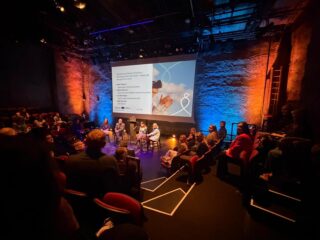
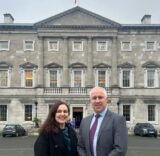
On February 11th, Head of Connected Hubs & Digital Innovation Stephen Carolan and WDC Policy Analyst Dr. Aisling Moroney addressed the Joint Oireachtas Committee on Social Protection, Rural and Community Development on the role of remote and blended work in Ireland.
In the opening statement to the committee, Stephen emphasised the Western Development Commission’s long-standing expertise in this area and its recognition of remote and blended work as a key driver of regional development and balanced population growth. This shift is now structurally embedded in Ireland’s labour market: Census 2022 recorded a 173% increase in those working mainly from home since 2016 and more recent CSO Labour Force survey data indicates that while full-time home working has stabilised, hybrid working patterns remain strong. Stephen shared data from the WDC’s 2023 National Remote Working Survey which demonstrated the significant value increasingly placed on flexibility. 92% of over 5000 respondents indicated that remote or hybrid working would influence their decision to change employer.
Stephen also noted that WDC are about to embark on a further and extended iteration of the National Remote Survey in collaboration with a post-doctoral researcher and other colleagues at Atlantic Technological University. This study will include more qualitative on-the ground research and case studies on the impacts of remote work and hybrid work on health and wellbeing, and on local and rural economic resilience and sustainability. There was broad agreement amongst committee members that further research is needed in this area and that the ATU/WDC work will help build and shape our understanding of this significant shift in both the labour market and in society. Meanwhile, inputs to the committee from Tracy Keogh and Dr Eoin Byrne from Grow Remote focused on the importance of treating remote working as a skill, and of linking employer engagement, training, and government policy supports into a coherent national approach to landing remote jobs across Ireland.
Both the opening statements and the wide-ranging committee discussion which followed highlighted the essential role of the 400-plus Connected Hubs as enabling infrastructure for remote and hybrid work, enterprise growth, and town and village renewal. Examples from Stephen and Aisling – and from elected members speaking about activity in their own constituencies – made it clear that many hubs are now anchors for digital inclusion, SME development and for a wide and ever evolving range of community events and services, particularly in more peripheral and rural areas. The further potential for public service provision via Hubs was also noted. Evidence presented to the Committee by the WDC as well as by researchers Dr Ann O’Brien and Professor Eoin Whelan from the University of Galway highlighted that the most effective rural hubs are locally responsive, professionally managed, and place a strong emphasis on building a sense of community.
The discussions at the committee highlighted that while remote and blended work present clear opportunities, they also require careful policy coordination to address shifting infrastructure needs, sectoral inequalities, and workplace adaptation. Through ongoing research, strategic engagement and implementation of the Connected Hubs network, the WDC remains committed to ensuring that remote and blended work support long-term regional resilience and sustainable local development.